A FlowKnow Initiative · Mumbai · 2026

Know your hormones. Own your health.

FlowKnow is a grassroots health literacy initiative making PCOD and hormonal health education accessible to every girl — regardless of where she grows up or whether she has internet access.

8.3%
of girls from India's top schools said their school adequately taught them about hormonal health.
181+
Responses
1 in 5
Girls has PCOD
Know Your Body Own Your Health 1 in 5 Girls in India Has PCOD Break the Silence Hormone Harmony Handbook FlowKnow Initiative · 2026 My Cycle is Data. And Data is Power. Education is Access Know Your Body Own Your Health 1 in 5 Girls in India Has PCOD Break the Silence Hormone Harmony Handbook FlowKnow Initiative · 2026 My Cycle is Data. And Data is Power. Education is Access
181+
Survey responses from girls globally
8.3%
Said school taught them adequately
48.1%
Said school taught nothing at all
640M
Women globally with hormonal imbalances
How it started

One room.
One pattern.
One question.

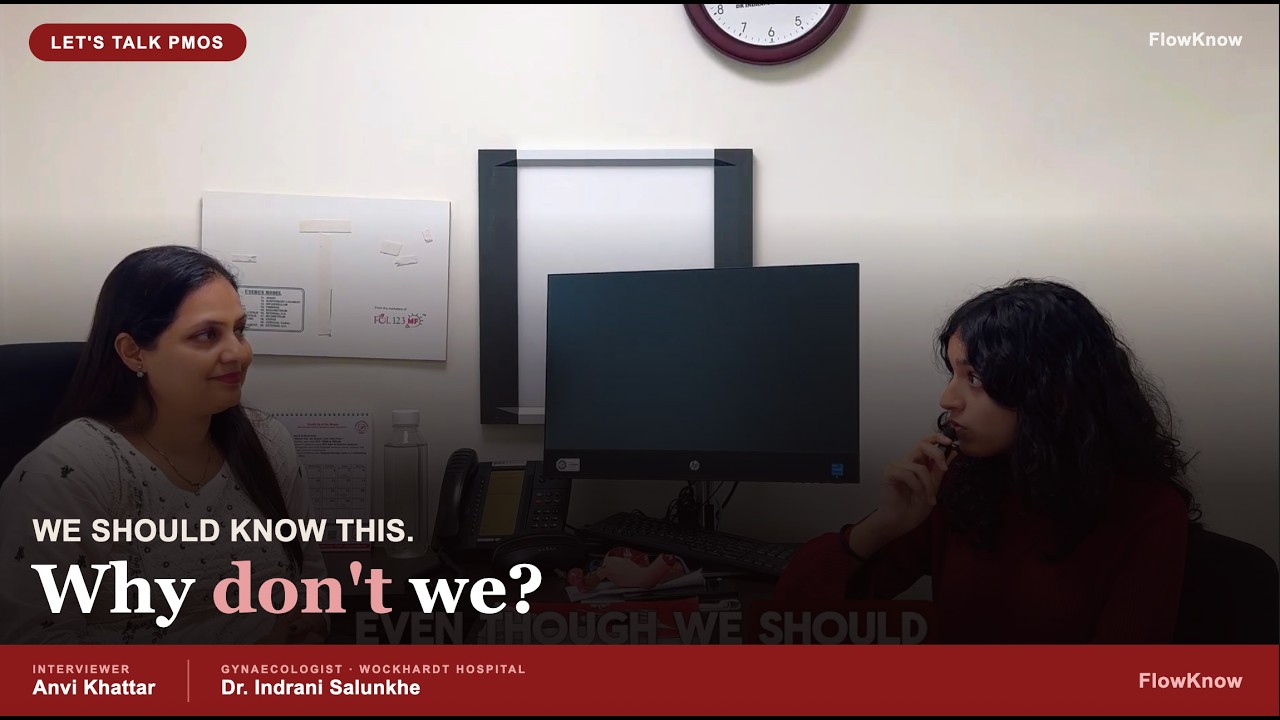
I was doing a clinical observership under a gynaecologist when PCOD stopped being an abstract concept for me.

It was the most recurring condition I encountered — across ages, across backgrounds. But what struck me most wasn't the diagnosis itself. It was the look on patients' faces. They were nodding. They were agreeing. And they had no idea what they were agreeing to.

Most had been diagnosed months or years before. They'd filled the prescription. But sitting in that room, watching their faces — it was clear they didn't actually know what was wrong with them. They'd been handed a name. Not an explanation.

I put together a survey and sent it to girls across India. 181 responses came back. Only 8.3% felt their school had adequately taught them about hormonal health. 48.1% said their school taught them nothing. The gap wasn't anecdotal. It was in the numbers. FlowKnow is my answer to that gap.

"One in five. I'd read that statistic before. But it means something completely different when you watch it walk through a door, sit down, and nod along to a diagnosis it doesn't fully understand."
— Anvi Khattar · Founder, FlowKnow · from the Handbook
8.3%
The statistic that started everything
Only 8.3% of girls from India's top schools said their school adequately taught them about hormonal health.
This wasn't sent to underserved communities — it was sent to educated girls at leading schools. If even they are left in the dark, the gap in lower-access communities is almost certainly far worse. That's why FlowKnow prints physical booklets in three languages — because real education can't require wifi.
FlowKnow initial awareness survey · 181 responses · 2026
What we do

Three ways we're
closing the gap

📋
Research & Surveys
Started with data — surveying girls globally to map what they know, what they're confused about, and where the silence lives. Every decision grounded in what the numbers reveal.
📖
The Hormone Harmony Handbook
A science-backed handbook in English, Hindi, and local languages covering PCOD, symptoms, nutrition, movement, and mental health. Printed and distributed free to girls without internet access.
🏫
Workshops Across India
In-person sessions at Mumbai municipal schools and remand homes. Live remote sessions from Rajasthan's heat to nursing colleges in Shimla's hills — because the gap doesn't end at the city boundary.
🛠️
The FlowKnow Toolkit — In Development
Designing a reusable toolkit — session guides, bilingual materials, facilitator resources — that NGOs, companies, and institutions can deploy independently. A self-sustaining model that multiplies reach without multiplying dependency on any single person.
The handbook

The Hormone Harmony
Handbook

Everything you need.
In your hands.

A science-backed guide to PCOD, hormones, and taking back your health. Written for young girls — in three languages, free of charge.

Hormones 101 — Your Body's Group Chat
Think of your hormones as a group chat — when everyone's connected, everything runs smoothly. When one goes offline? Total chaos.
Oestrogen — Mood manager, skin glow regulator, cycle controller
Progesterone — The calm-down hormone, post-ovulation protector
Insulin — Blood sugar regulator. When it fails, everything suffers
Cortisol — Stress hormone. Helpful short-term, devastating when chronic
PCOD vs PCOS — Not the same thing
Most people use these interchangeably. They are not the same — and the distinction matters more than you think.
PCOD — A condition. More common, often reversible with lifestyle changes
PCOS — A syndrome. More complex, systemic, metabolic impact
FALSE: "PCOD and PCOS are the same thing"
TRUE: "Lifestyle changes can reverse PCOD" — in many cases, yes
Symptom Tracker — Your Body is Sending Data
Symptoms aren't your enemy — they're information. Your body has been trying to tell you something.
Cystic acne — Deep, jawline-heavy. Caused by excess androgens, not poor hygiene
Brain fog — Reported by 70% of PCOS patients. Real, and rarely discussed
Irregular periods — Fewer than 8 cycles/year is a clinical signal
Anxiety — Women with PCOS are 3x more likely to experience clinical anxiety
Plate & Palette — Fuel, Not Restriction
This is not about dieting. It's about fuelling your body to keep insulin stable.
Ideal plate: 50% veg · 25% protein · 15% complex carbs · 10% healthy fats
Magnesium — reduces insulin resistance, dramatically improves sleep quality
Inositol — star PCOS supplement. 50+ clinical trials. Restores ovulation
Seed cycling — Flax + pumpkin (Day 1–14) · Sesame + sunflower (Day 15–28)
Movement & Mind — Exercise Smarter
Daily intense HIIT chronically spikes cortisol. Here's what actually helps PCOS.
Strength training 3x/week — improves insulin sensitivity, reduces androgens
Walking 30 mins post-meal — reduces blood sugar spike by up to 30%
Yoga — directly reduces cortisol via parasympathetic nervous system
Under 6 hrs sleep — cortisol rises, insulin resistance worsens, PCOS worsens
The Hormone Harmony Handbook
FlowKnow Initiative · Vol. I · 2026 · Curated by Anvi Khattar
01Welcome to Your Body
02The Big Debate — PCOD vs. PCOS
03The Science Lab
04The Symptom Tracker
05The Plate & Palette
06Movement & Mind
07Your Glow-Up Guide
Available in
English Hindi Local languages
Impact on the ground

From Rajasthan's heat
to nursing schools in Shimla

Every workshop is a room full of girls who have never been told how their own body works. Some sit cross-legged on gym floors in Mumbai's municipal schools. Some watch a projected screen in the scorching heat of a Rajasthan classroom. Some are student nurses in Shimla, in the cold of the hills, being trained to care for patients — without ever having been given the language to understand their own bodies.

FlowKnow goes to all of them — in person, and remotely.

Anvi conducting a FlowKnow workshop at a Mumbai municipal school
In person · Mumbai
Municipal school — workshop in close conversation
30+ girls at a single FlowKnow session
In person · Mumbai
30+ girls at a single session
Projected session bringing the handbook to life
Remote reach · Mumbai
Projected remote session — the handbook coming to life
🏫 In-person workshops
Weekly sessions at Mumbai municipal schools and remand homes — interactive, in the room, in the language the girls feel most comfortable in. Booklets distributed in English and Hindi.
📡 Remote reach
Live sessions projected into classrooms and assemblies — from nursing colleges in Shimla to schools in Rajasthan — expanding FlowKnow beyond Mumbai, one screen at a time.
Research & surveys

Data-driven from
day one

📊
Initial Awareness Survey
Sent to girls across India and globally to map baseline PCOD awareness, knowledge gaps, and where young women are — and aren't — getting their hormonal health information.
181+
Responses collected
8.3%
Said school taught adequately
48.1%
Said school taught nothing
75%
Underestimated PCOD prevalence
Still openGirls globally~5 mins
Fill the survey ↗
💬
Post-Booklet Impact Survey
Sent to readers after they go through the Hormone Harmony Handbook — measuring what they learned, what changed, and whether FlowKnow is actually making a difference.
Vol. I
First edition distributed
3
Languages — EN, HI + local
If you've read the Hormone Harmony Handbook, your feedback directly shapes the next edition. It takes under 3 minutes.
Post-reading only~3 mins
Give feedback ↗
Founder
Anvi Khattar
Grade 12 · Bombay Scottish School · Mumbai

FlowKnow began not as an idea, but as a moment — a gynaecology ward, a recurring condition, and the same absence of understanding in patient after patient. That moment became a survey. The survey became data. The data became a handbook. The handbook became workshops. And the workshops keep growing.

Alongside this initiative, Anvi conducts ongoing research at Gennova Biopharmaceuticals under Dr. Tathagatha Mukherjee, has conducted genetics research using live C. elegans at Ashoka University's Lodha Genius Programme, and attended Yale University's pre-college Biosciences & Medicine pathway. Gold Medal, British Biology Olympiad 2026.

Biology researcherGennova BiopharmaceuticalsYale Biosciences '24Ashoka Lodha Genius '25Public healthGold Medal BBO 2026
FlowKnow · Journey so far
Clinical observership at Wockhardt Hospital — PCOD as the most recurring condition. The knowledge gap becomes undeniable.
Global survey — 181+ responses from girls across India and globally mapping hormonal health literacy.
Hormone Harmony Handbook — researched, written, designed, printed in English, Hindi, and local languages. Free distribution.
Municipal school workshops — weekly sessions across Mumbai schools and remand homes.
Remote reach expanded — live sessions from Rajasthan to nursing colleges in Shimla.
FlowKnow Initiative formally founded · Vol. I distributed · Toolkit in development · 2026